


Rent, Buy, or Buy with an AMC?
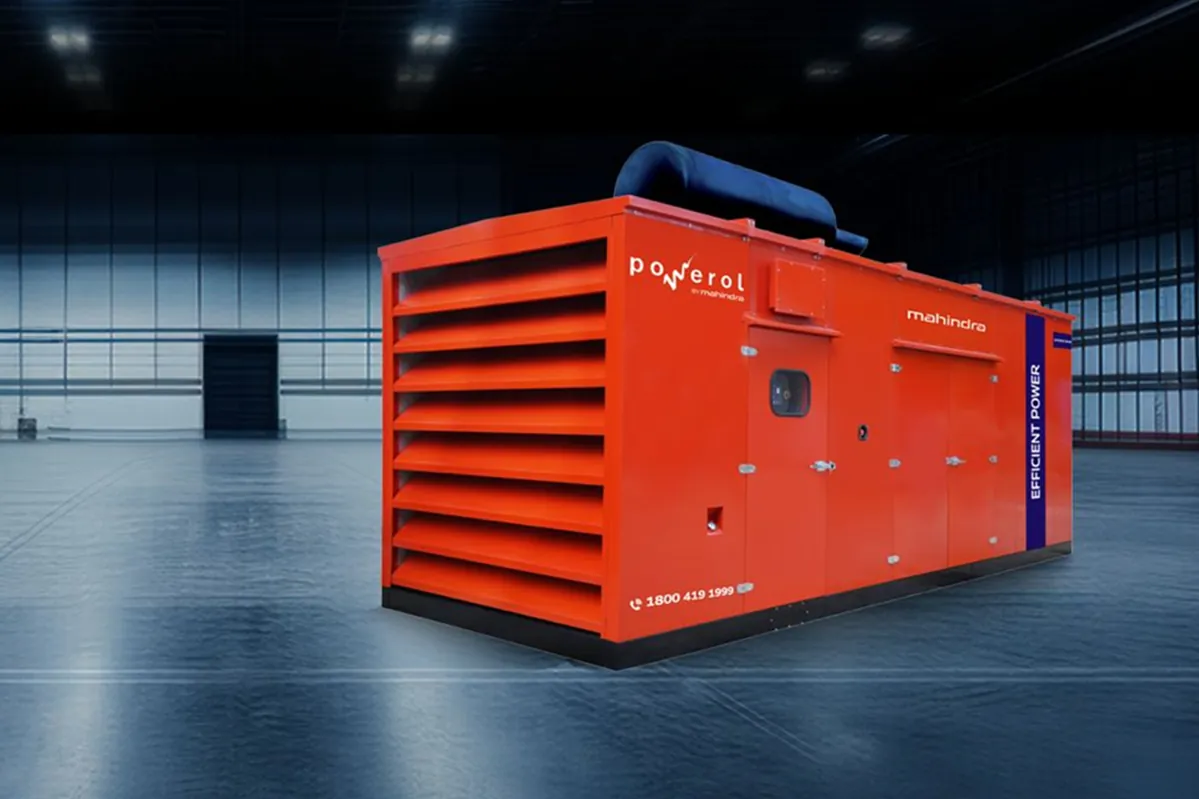
Three ways to get backup power, and the questions that decide between them.
A buyer needing standby power has three routes. Rent a set for the period it is needed. Buy a set and maintain it in house. Or buy a set and contract maintenance to a service provider under an annual maintenance contract.
The decision is usually framed as a cost comparison. It is more usefully framed as a question about duration and about who carries the operating burden, because a diesel generator is not a one-time purchase. It is an asset with statutory obligations, a service schedule and an overhaul point, and those continue for its whole life.
In short. Rent when the requirement is temporary or the load is not yet known. Buy when the requirement is permanent, which is the case for most commercial, institutional and industrial buildings. Once you have bought, the real decision is whether maintenance sits with your facilities team or with a contracted provider, and that turns on whether you have qualified people, spares access and a defined response time. Escon Gensets supplies, installs and maintains diesel generator sets. It does not operate a rental fleet, so the rental section below is written as guidance rather than as an offer.
The Three Options
Rental
A set is hired for a defined period, typically with delivery, installation, fuel arrangement and maintenance included in the rate. The asset stays with the rental company. Cost is operating expenditure.
Purchase, self-maintained
The buyer owns the set and carries out maintenance using in-house staff or ad hoc contractors. Capital expenditure up front, with running costs and service obligations sitting internally.
Purchase with an AMC
The buyer owns the set and contracts scheduled maintenance, and depending on the package breakdown support and spares, to a service provider. Capital expenditure plus a predictable annual service cost.
When Renting Makes Sense
Rental is the right answer more often than sales-led content admits. It suits:
- Construction and project power, where the requirement ends with the project.
- Events and temporary installations, measured in days or weeks.
- Bridging periods, such as while a permanent set is on order, under repair, or awaiting statutory approval.
- Uncertain load, where the eventual demand is not yet known well enough to size a permanent set. Sizing against a guess produces either a derated installation or one that runs at a load factor low enough to damage the engine.
- Seasonal or campaign demand, where the set would otherwise sit idle for most of the year.
The economics turn on utilisation and duration. A set needed for three months is almost always cheaper to rent. A set needed permanently is almost always cheaper to buy. The crossover depends on the rate, the capital cost and the cost of capital, and is worth calculating rather than assuming.
Rental also transfers the statutory and maintenance burden, which has real value for a buyer without engineering staff.
When Buying Makes Sense
Purchase suits a permanent requirement, and most standby power requirements are permanent. Beyond duration, four factors point to buying:
The installation is integrated with the building
A permanent DG room, a fixed exhaust stack, bulk fuel storage and cabling into the building distribution are not compatible with a rotating rental asset.
The set must be sized and specified for your load.
Owned sets can be specified against a load study, with the right rating, the right acoustic treatment for the site and the right panel configuration. Rental fleets offer what is in the fleet.
Statutory approvals are tied to the installation
Electrical Inspectorate approval, pollution control board consents and any PESO licensing attach to a specific installation. Where a set is permanent, those approvals are obtained once.
Availability requirements are high
Where downtime carries real cost, as in data centres, hospitals, cold storage and continuous process operations, owning the asset means controlling its condition rather than depending on fleet availability.
The Decision That Actually Matters: Maintenance
Once a set is bought, the recurring question is who maintains it. This decision is made carelessly more often than the purchase decision, and it has a larger effect on the life of the asset.
A diesel generator has a defined service requirement whether or not it runs often. Across the Mahindra Powerol range the lube oil change period is 500 hours, and the overhaul period extends to 15,000 hours. Batteries, coolant and fuel degrade on a calendar basis rather than a running-hours basis, which is why a standby set that starts twice a year still needs scheduled attention.
There are also obligations that do not depend on maintenance policy at all. Under Regulation 5 of the CEA Safety Regulations 2023, any installation with more than 250 kW of connected load must have a designated Electrical Safety Officer, qualified and inspecting at intervals not exceeding one year. Regulation 32 requires periodic inspection and testing at intervals not exceeding five years.
Self-maintenance works when
You have qualified electrical and mechanical staff on site, access to genuine spares without lead-time risk, test equipment and calibration, a documented service schedule that is actually followed, and tolerance for the response time your own team can deliver on a Sunday night.
Large industrial sites with permanent engineering departments often self-maintain well.
An AMC works when
Your team is facilities rather than engineering, downtime carries cost, spares access is uncertain, or you want maintenance to be a predictable annual line rather than a series of reactive purchases.
The other argument for an AMC is documentary. Scheduled service records, test reports and maintenance history matter at periodic inspection, at warranty claim, and at resale.
What an AMC Covers, and How Packages Differ
AMC is not one product. Escon offers four structures.
| Package | Scope | Suits |
|---|---|---|
| Basic | Monthly checks, preventive maintenance, inspection, cleaning, performance checks, service reports. Consumables and spare parts charged separately | Buyers with predictable duty and their own spares budget |
| Quarterly | Four visits per year, otherwise as Basic | Lightly used standby sets |
| Comprehensive | Preventive maintenance, breakdown support, labour, lubricants, filters, routine consumables and covered spare parts as agreed | Buyers wanting a single predictable annual cost |
| Customized | Coverage tailored to the site, including 24x7 support, remote locations, critical applications and annual overhauls | Data centres, hospitals, critical process sites |
A bi-monthly visit schedule is also available.
Breakdown scope across packages covers engine and alternator inspection, control panel inspection and testing, battery and charger health check, coolant, oil and filter inspection or replacement, fuel system inspection, load testing where applicable, service reports and maintenance history, and technical recommendations for repairs.
Response commitments. Escon operates 24x7 emergency breakdown support for critical customers, with breakdown calls attended within 4 hours and commissioning calls within 48 hours. Preventive maintenance follows the OEM schedule, spares and lubricants are genuine, and a digital service report is issued after every visit.
Comparing the Three
| Rental | Purchase, self-maintained | Purchase with AMC | |
|---|---|---|---|
| Cost treatment | Operating expenditure | Capital, then internal cost | Capital, then predictable annual cost |
| Best for duration | Days to months | Permanent | Permanent |
| Sizing | What the fleet offers | Specified to your load study | Specified to your load study |
| Statutory approvals | Rental company's burden | Yours, once, at installation | Yours, once, at installation |
| Maintenance burden | Rental company | Your team | Contracted, with defined response |
| Response time on failure | Per rental terms | Whatever your team can deliver | Contractually defined |
| Service documentation | Not retained by you | Only if you maintain it | Issued after every visit |
| Escon provides | No | Yes, supply and installation | Yes, supply, installation and AMC |
What to Establish Before Deciding
- How long is the requirement? Under six months usually points to rental. Permanent points to purchase.
- Is the load known? If not, size properly before buying. An oversized set running at low load factor causes wet stacking and carbon deposits.
- Who will maintain it, and can they? Qualified staff, spares access, test equipment and a response time you can live with.
- Does the installation exceed 250 kW connected load? If so, an Electrical Safety Officer is a statutory requirement regardless of maintenance policy.
- What does downtime cost? This sets the response time you need and therefore the AMC tier.
- What documentation will you need later? For periodic inspection, warranty and resale.
Frequently Asked Questions
Is renting cheaper than buying a generator?
Over a short period, almost always. Over a permanent requirement, almost never. The crossover depends on the rental rate, the capital cost of an equivalent set, installation cost and your cost of capital, so it is worth calculating for your specific case rather than assuming. Rental also transfers the maintenance and statutory burden, which has value beyond the rate itself.
Does Escon Gensets rent generator sets?
No. Escon supplies, installs and maintains diesel generator sets, and manufactures acoustic enclosures. It does not operate a rental fleet. Where a requirement is genuinely temporary, rental is the right answer and a rental provider is the right supplier.
Do I need an AMC if my generator hardly ever runs?
Usually yes, and the reasoning is counterintuitive. A standby set that rarely runs still degrades. Batteries lose charge, coolant and fuel deteriorate, and seals dry out. The failures that matter on standby sets are typically failures to start rather than failures under load, and those are exactly what scheduled inspection catches. A quarterly or bi-monthly package is often the right level for a lightly used set.
What is the difference between a Basic and a Comprehensive AMC?
Coverage of parts and labour on breakdowns. Basic covers scheduled preventive maintenance, inspection and reporting, with consumables and spare parts charged separately as used. Comprehensive adds breakdown support, labour, lubricants, filters, routine consumables and covered spare parts within the agreement. Basic gives a lower fixed cost with variable exposure. Comprehensive gives a higher fixed cost with less variability. Which is better depends on how predictable your duty cycle is.
Can I maintain the generator myself and keep the warranty?
It depends on the OEM's warranty terms, which typically require maintenance to the published schedule using genuine parts, with records kept. Self-maintenance is compatible with that if the schedule is followed and documented. The risk is not the decision to self-maintain, it is undocumented or delayed servicing, which is the common reason claims are challenged.
Sources
Central Electricity Authority (Measures relating to Safety and Electric Supply) Regulations, 2023, regulations 5 and 32. Mahindra Powerol published service intervals and range specifications. Escon Gensets service operations profile.